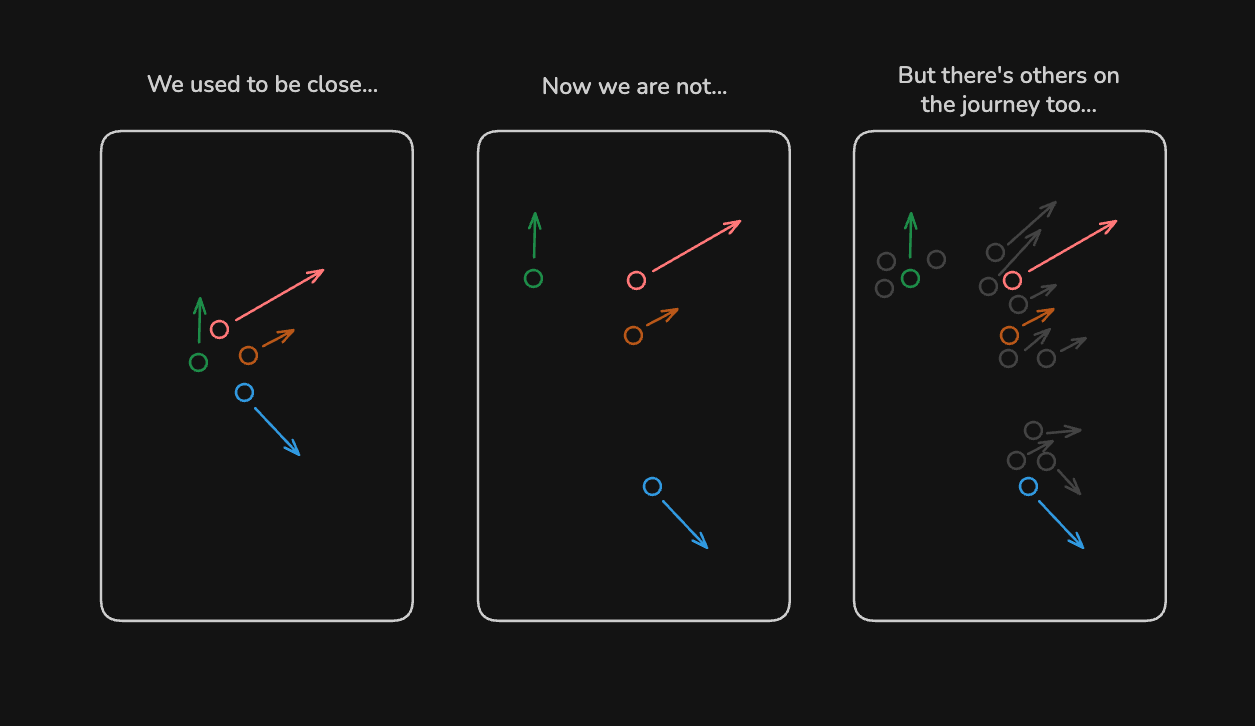
 Most friendships aren’t broken by conflict. They’re broken by physics.
Not literal physics, obviously. But something close.
Over time, people end up in different places, moving at different speeds, pulled by different forces.
And when that happens, the conversation that used to feel effortless starts to feel… irrelevant.
The meetups become catch-ups.
The advice becomes generic.
The relationship is still warm, but no longer useful.
This is a manifesto for a learning group designed around that reality.
The problem: friends drift, even when nobody does anything wrong
We like to say friendships drift because of time, distance, or busyness.
But “busy” is a lazy explanation. People make time for what feels high-value. The deeper reason friends drift is that they stop being relevant mirrors for each other.
Relevance isn’t about liking the same things. It’s about sharing enough of the same problems that the conversation creates traction.
When you no longer face comparable constraints—career stage, family responsibilities, financial reality, risk tolerance, ambition—your advice becomes theoretical. Your updates become entertainment. You still care, but you can’t help each other the way you used to.
That’s tragic, and it’s also normal.
So instead of moralizing it (“I’m a bad friend”), we can model it.
A new mental model:
Displacement, Velocity, Acceleration
Think of every person as moving through “life space.”
Not just physical location—more like a coordinate system of career stage, responsibilities, identity, ambition, and current stakes.
1. Displacement: Where are you?
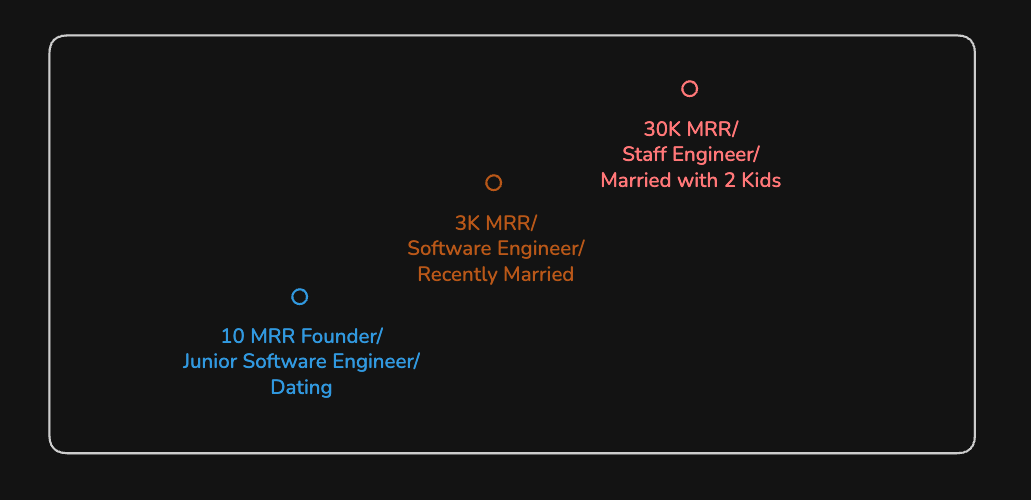 The simplest, non-vector version: your current position.
Examples:
Kids vs no kids
Junior vs senior
0→1 vs 1→10 company stage
ARR bands, comp bands, role scope
New city vs rooted community
Displacement is often easy to observe.
2. Velocity: How fast are you moving?
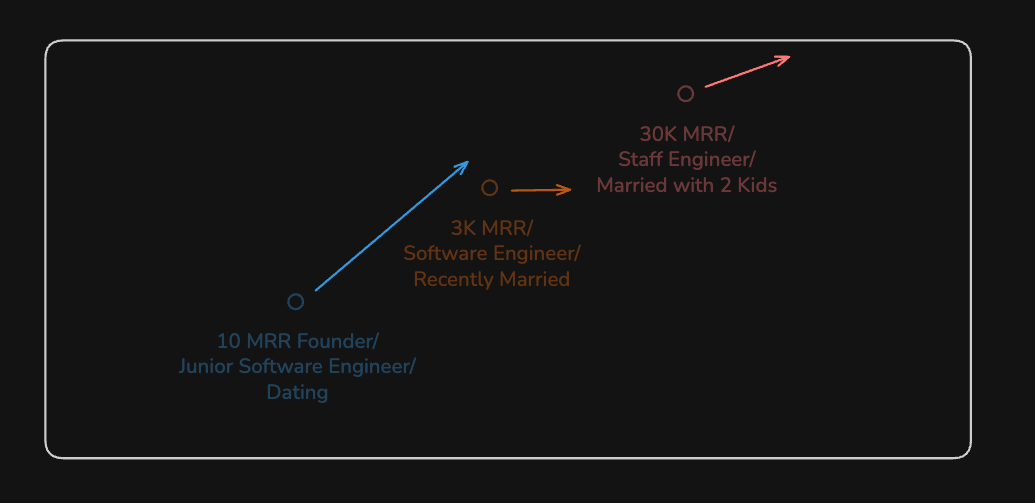 Your rate of change—how quickly you’re growing, learning, shipping, transforming.
Examples:
MoM growth (business)
Promotions / scope expansion (career)
Output cadence (writing, building, selling)
Skill acquisition rate
Degree of discomfort you’re voluntarily taking on
Velocity is harder to measure because it’s partially invisible: it shows up as energy, momentum, and trajectory—often only obvious in hindsight.
3. Acceleration: What’s changing your velocity?
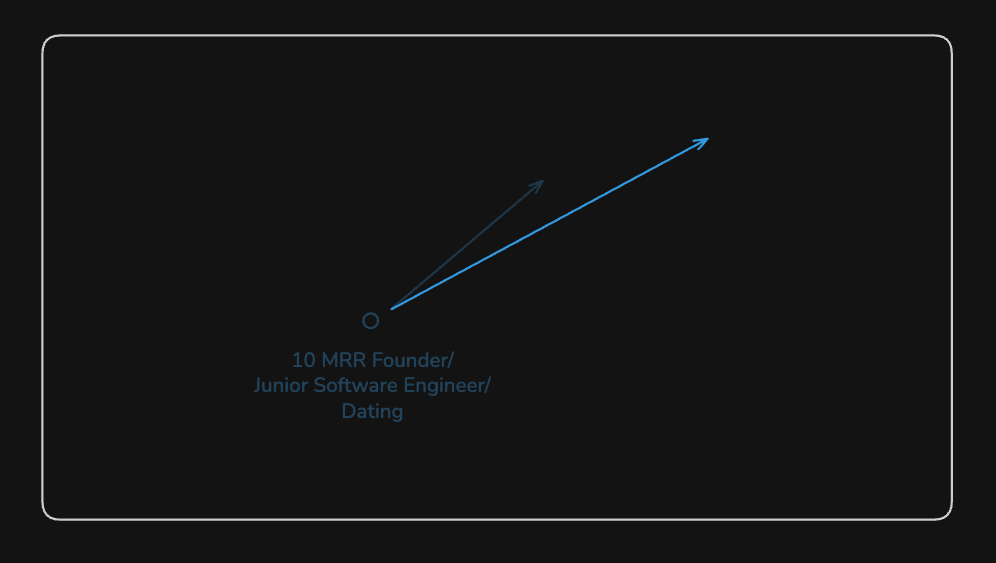 Acceleration is the thing behind the thing: the systems and forces that make you speed up—or slow down.
Examples:
Drive and clarity
Mentorship and network
Habits and systems
Health and recovery
Environment and constraints
Acceleration is where compounding begins.
Why peer groups decay: the three drift scenarios
Once you view friendships and peer groups through displacement/velocity, drift becomes predictable.
Scenario A: Same displacement, different velocity
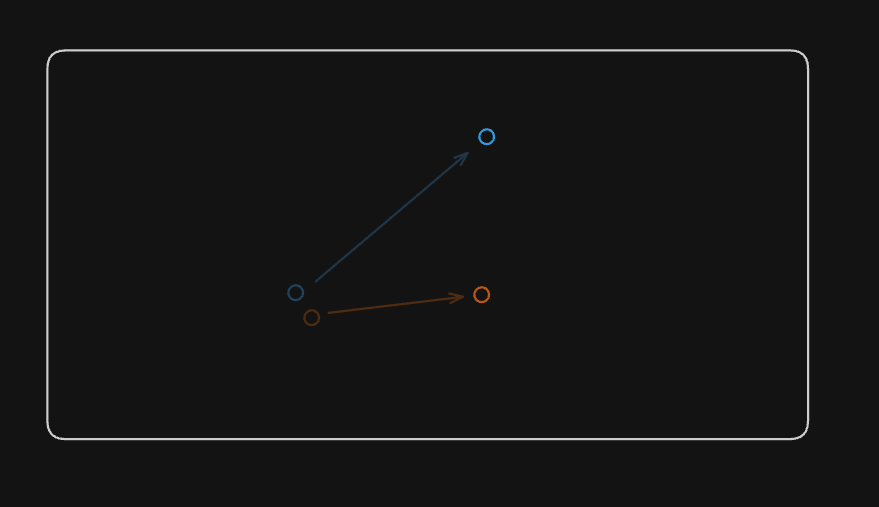 You start as equals: similar job, similar life, similar challenges.
Then one person’s velocity increases—new role, new ambition, new momentum. Their problems change. Your conversations get stuck in the old layer.
What happens: the faster-moving person starts skipping, disengaging, or mentally “graduating.” The slower-moving person feels confused or abandoned.
No villains. Just mismatch.
Solution: regroup—find peers at the new displacement with similar velocity.
Scenario B: Same velocity, different displacement (converging → then diverging)
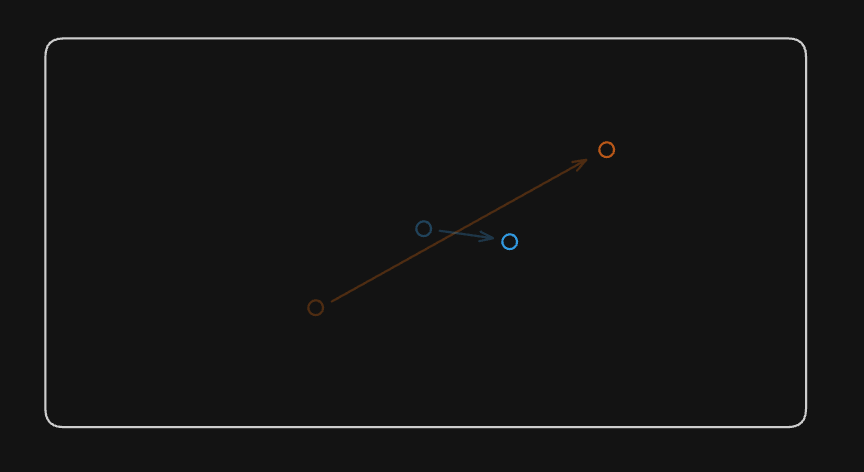 One person is ahead. They mentor naturally.
But the “mentee” learns fast and catches up, sometimes surpassing. The relationship’s usefulness flips, and the old mentor dynamic can become awkward.
What happens: resentment (from the former mentor), boredom (from the new faster mover), or polite distance.
Solution: regroup—don’t cling to a role. Peers are not permanent titles.
Scenario C: Different displacement, different velocity (diverging)
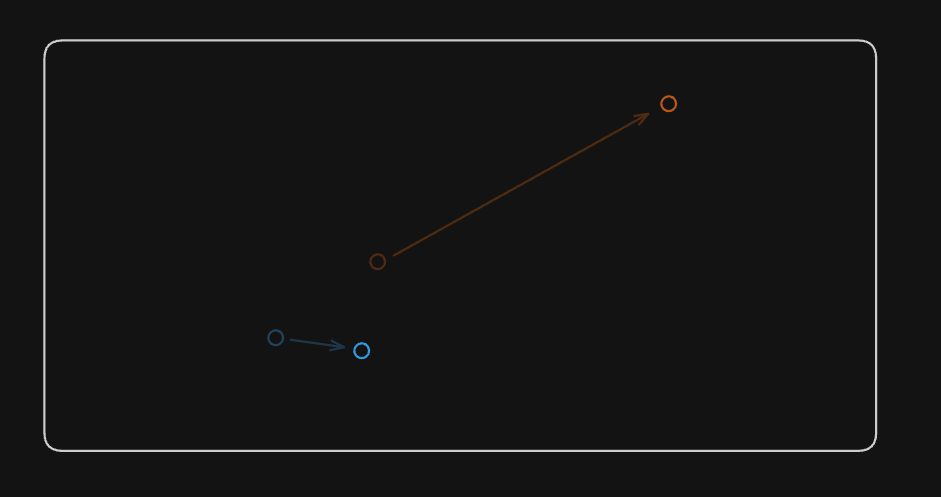 This is the cleanest drift. One person is operating in a different world, at a different pace.
What happens: the person ahead feels the other “doesn’t get it.” The person behind feels judged, or can’t relate, or opts out.
Solution: keep the friendship warm—but don’t force it to be your primary growth container.
The core claim of this manifesto
Your peers are the people with similar displacement and velocity.
Not necessarily your oldest friends. Not necessarily your favorite people. Not necessarily the people you “should” be close to.
Just… the people who are close enough to your trajectory that you can help each other right now.
And because displacement and velocity change, peer groups must be allowed to change by design—not by silent drifting.
The Pod: a professional peer unit that doesn’t wobble
 This is where the design comes in.
Why 3 people?
A pod is three people, by default.
Three is small enough for intimacy, but large enough for stability:
A chair with 3 legs doesn’t wobble.
Two people can feel intense (“dating energy” or constant direct judgment).
Four+ people makes it easy to hide, skip, or coast.
With three:
Accountability stays human.
Social pressure stays light but real.
If one person has a bad week, the pod can still hold.
LearningLoop uses this exact structure—small groups of three + weekly office hours—to maximize belonging, speed, and credible feedback. The pod takes that proven base and adds one critical evolution: planned regrouping based on trajectory.
Operating system: how pods run
1) Weekly check-in (60 minutes)One call per week. Same cadence. Same ritual.
The purpose is not “networking.” It’s not “therapy.” It’s a structured loop:
What did you commit to last week?
Did you do it? If yes: why did it work? If no: what broke?
What’s the highest-leverage thing this week?
Where are you stuck, and what help do you need?
What are you avoiding?
This is the smallest repeatable unit of compounding.
2) Low cognitive load by designFounders and high performers don’t need more work. They need fewer decisions.
The pod format should feel like:
minimal prep
maximum signal
no performative updates
If people can ghost without consequences, the container collapses.
You need to be strict on no-shows for exactly this reason: it protects member time and keeps the culture serious.
Your version can choose the exact rule, but the principle stays.
Showing up is part of the product.
4) Confidentiality as a feature, not a policyIf people can’t be candid, they’ll be shallow. If they’re shallow, they’ll churn.
Pods require a private-by-default norm:
no sharing outside the pod
no social clout farming
no “I heard from someone that…”
Trust is what makes advice credible.
The most important design choice: regrouping is the default
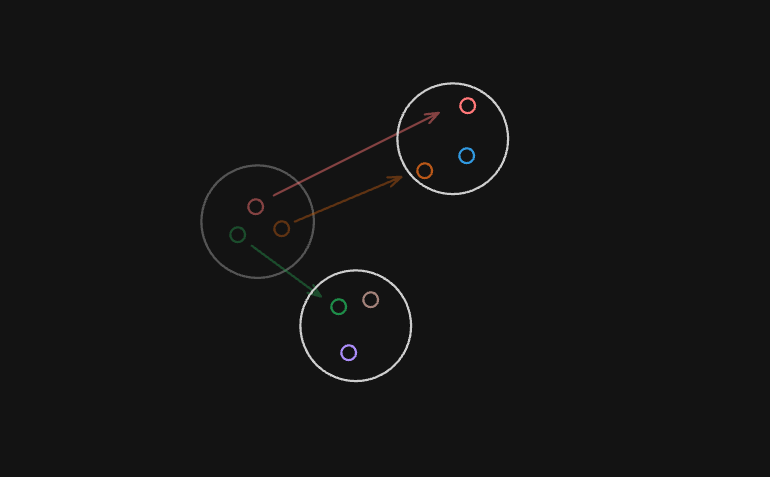 Most communities treat reshuffling as a failure.
This one treats it as maintenance.
Regroup quarterly by default (every 12 weeks)
A quarter is long enough to build trust and show real progress, and short enough to correct drift before the pod becomes stale.
At the end of the quarter, each person asks one question:
“Is this pod still high-value for my next 12 weeks?”
If yes, continue.
If not, regroup. Without the drama.
This is “vote with your feet,” but made explicit and socially safe.
A pod is only stable when everyone finds it valuable
Here’s the uncomfortable truth: if even one person feels the pod is no longer valuable, the pod will decay anyway. Just slowly and silently.
So the manifesto makes it clean:
no guilt
no “we should still keep meeting”
no long fade-out
Regrouping is respect.
Why this matters: growth needs mirrors, not audiences
Most people have plenty of “friends” and “followers.”
What they don’t have is:
a small number of peers who will notice if they stall
people whose advice is based on lived constraints, not theory
a safe place to admit fear, confusion, shame, ambition
a recurring mechanism that forces reflection into action
Pods are not about being social. They’re about staying in motion.
Who I designed this is for (starting narrow, then expanding)
Initially, I thought this is for founders. Because founder problems are uniquely isolating and the ROI of credible peer feedback is extreme.
But the model generalizes. It would work for:
creators
leaders
ambitious professionals in any domain
support groups
Anyone whose growth is self-directed and lonely will recognize the need.
Closing: keep your old friends. Build new peers.
This manifesto isn’t telling you to abandon old friendships. It’s telling you to stop expecting old friendships to do a job they weren’t designed to do.
Old friends are history. They remind you who you were.
Pods are trajectory. They help you become who you’re becoming.
You need both.
And if you design your peer system around displacement and velocity—if you normalize regrouping instead of drifting—you don’t just keep relationships alive.
You keep yourself moving.
Steal this.
If you think this model of thinking is helpful for your network or organisation.
Steal it. Fork it. Modify it.
Now go find your tribe.
This is inspired by the founder communities, LearningLoop founded by Sina, a meticulously moderated founder network that pairs members into small groups of three for weekly peer-to-peer office hours, with strong norms around quality, privacy, and showing up. LearningLoop’s model works because it acknowledges a blunt truth: growth is social, but only when your peers can actually see you.
This is an evolution of that idea: a “pod” system designed not just for founders, but eventually for any serious professional—and designed explicitly around why peer groups decay, and how to rebuild them without guilt.